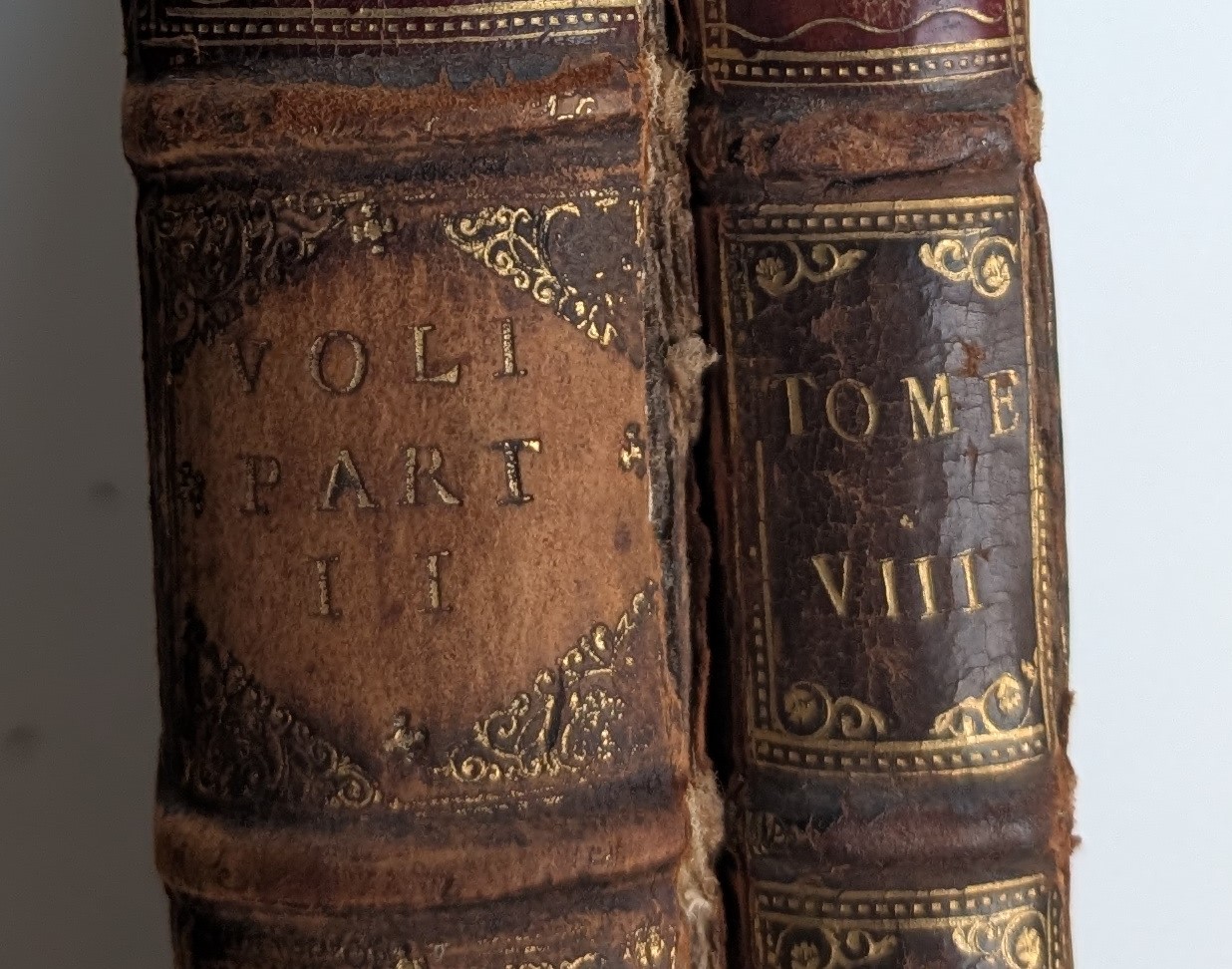
A Book with Two Spines
Posted on 20 August 2026
What did historic bookbinders do when custom orders were cancelled?
I'm sure it's happened to a few of us - a binding has been ordered, perhaps part paid for, but then for whatever reason the final payment never comes. It could be due to changing circumstances of the buyer, or maybe they just aren't interested in the project any more, and while this is a pretty rare occurrence - it must have happened occasionally to binders since the dawn of bookbinding.
Well, perhaps one example of this sits on my shelves - on a pair of folio volumes of L'Antiquité expliquée et représentée en figures printed in Paris in 1719. These should be a very valuable pair of books, but a book breaker has had a go at both of them and almost all of the fine copperplates have been removed.
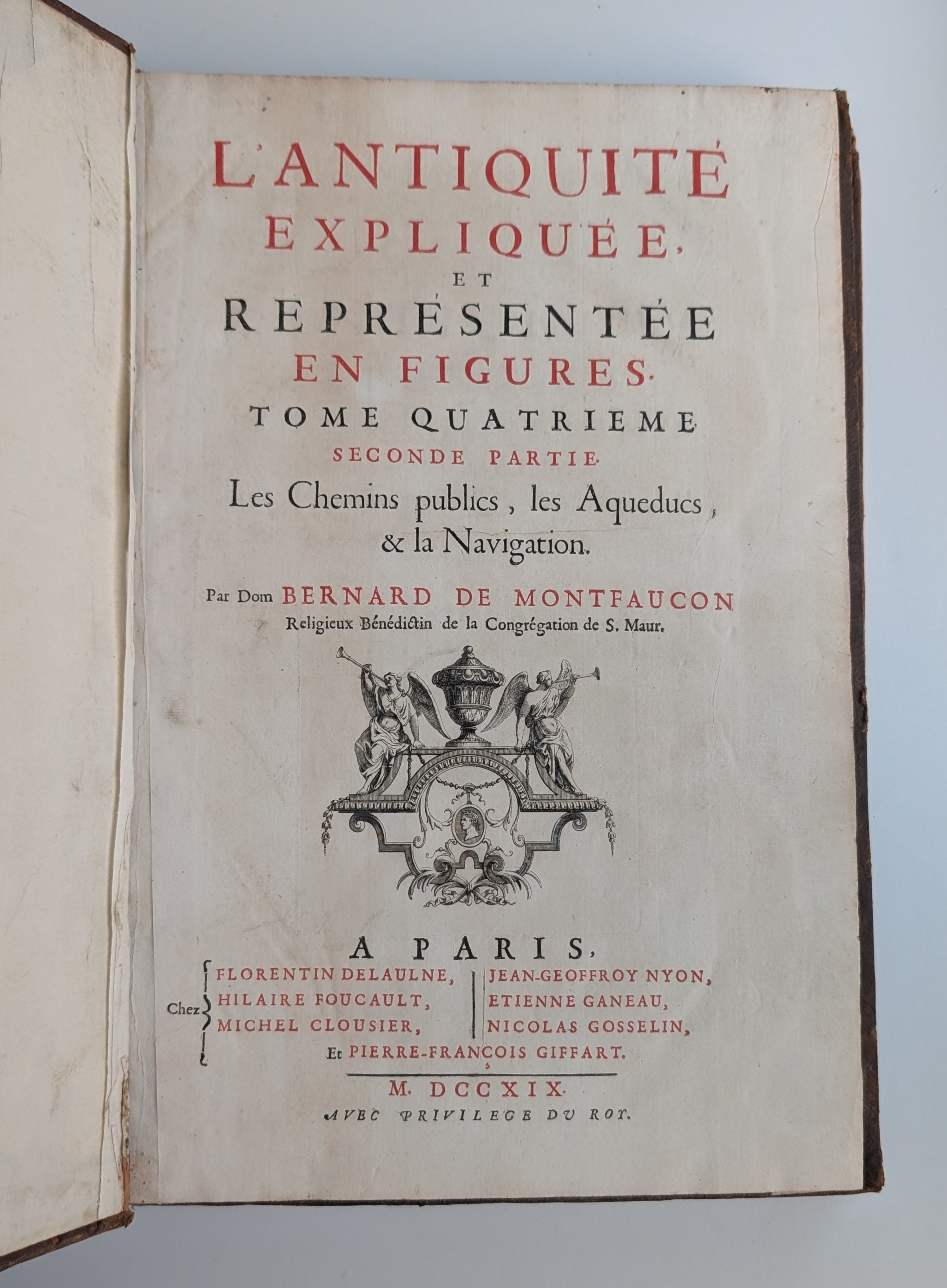
Title page of one of the volumes
But that is not the most interesting part about these books! The bindings are something quite special, and unique to my collection.
At first glance on the shelf, they look like a matched pair - both originating from a different set - because the spines are completely different. One is titled in French, the other partly in French and English and the gold tooling itself is very different.
However, both books have exactly the same tooling on the covers - and, unusually for books printed in Paris, they are bound with Cambridge panel style boards.
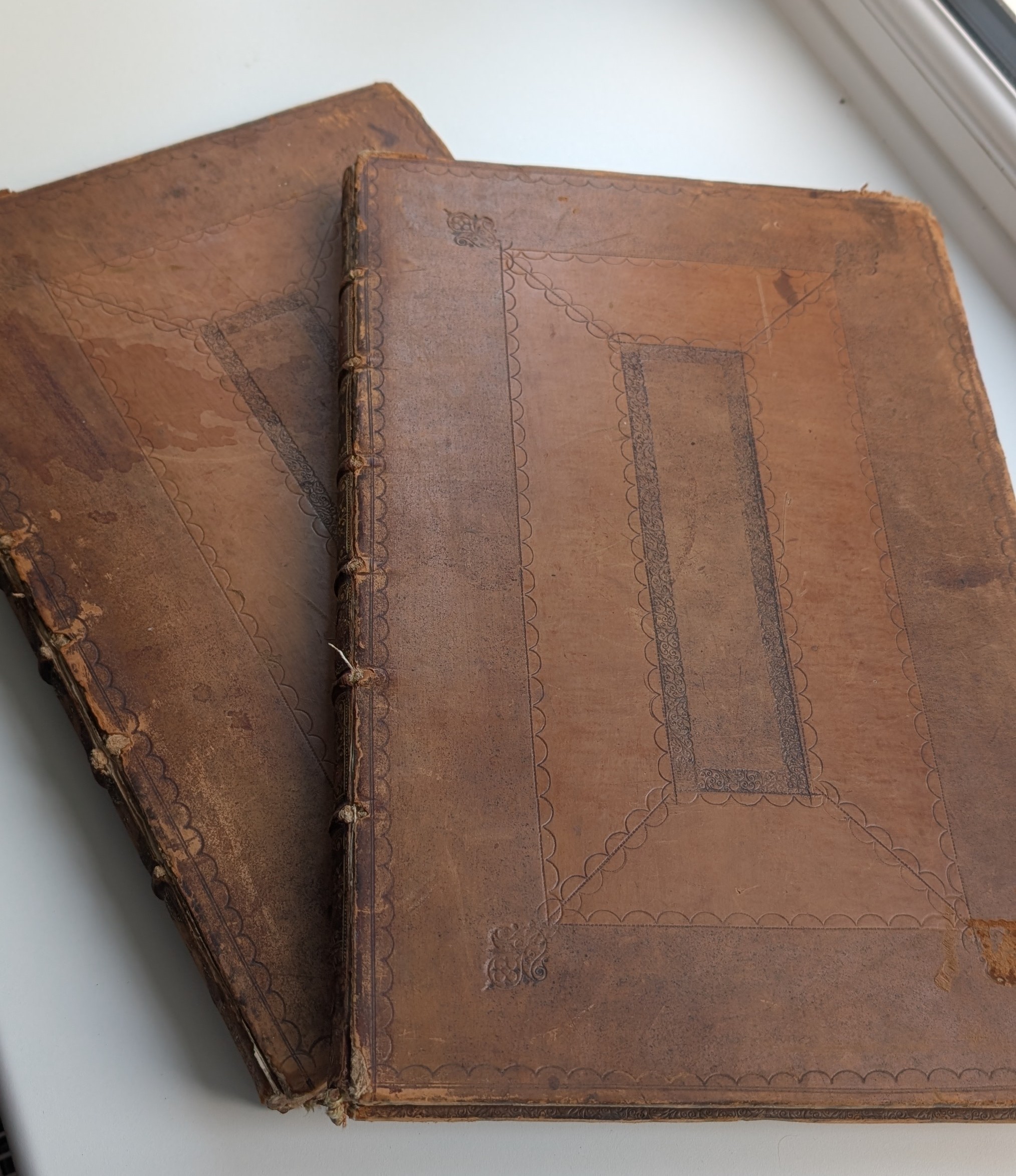
Cambridge panel style covers
When I first saw that I wasn't too surprised and presumed that one book has been rebacked - but a closer look showed that both spines were near enough contemporary, so why the difference?
Well, the bottom of one of the spines gave it away:
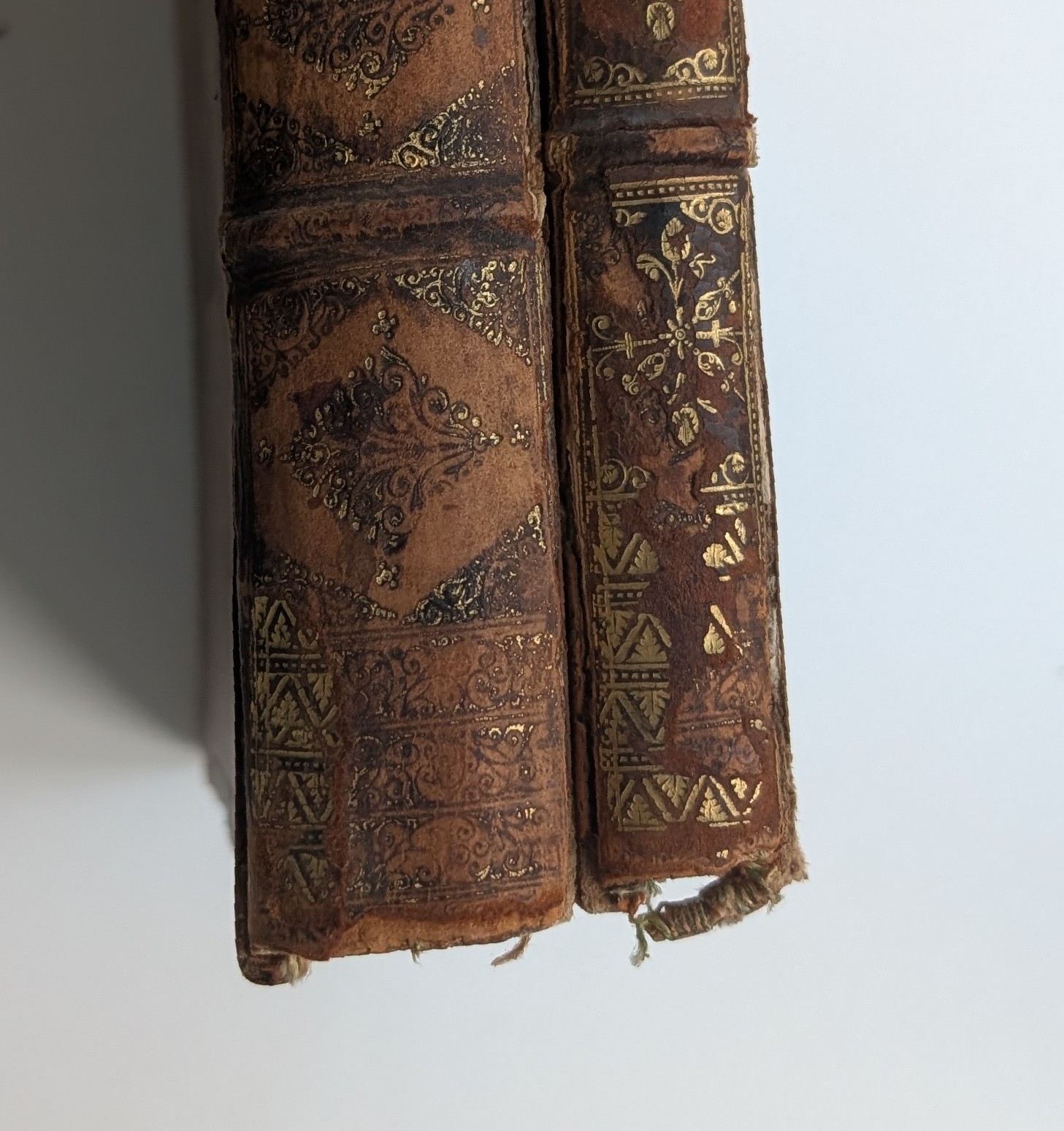
Bottom of the spines showing two layers of leather on the bottom left corner
A scrap of leather at the bottom of one of the spines showed that actually both spines had looked the same - there was a newer spine covering pasted over an earlier one! Close inspection of the other book showed the same thing. Both books were in contemporary bindings, with an apparently second near contemporary spine covering pared down, pasted on top of the other, and then gilded and finished.
But why had this happened?
Other than the design of the gold tooling, there was one major difference between the two spines - the original spine had been titled in English, but the spine pasted over the top was titled in French.
Spine labels, one in English and one in French
The spine underneath seems to be in perfect condition, there is no obvious damage or mistake in the gilding.
The only likely explanation I can offer is that the original binding, which is English in design and titled in English, was ordered by an English person, perhaps on something like the grand tour, and then they either never paid for it or never returned to pick it up. So the binder, to save as much on cost as possible, prepared a thin piece of leather to go over the spine and re-title it in French so it could be offered to the Parisian market.
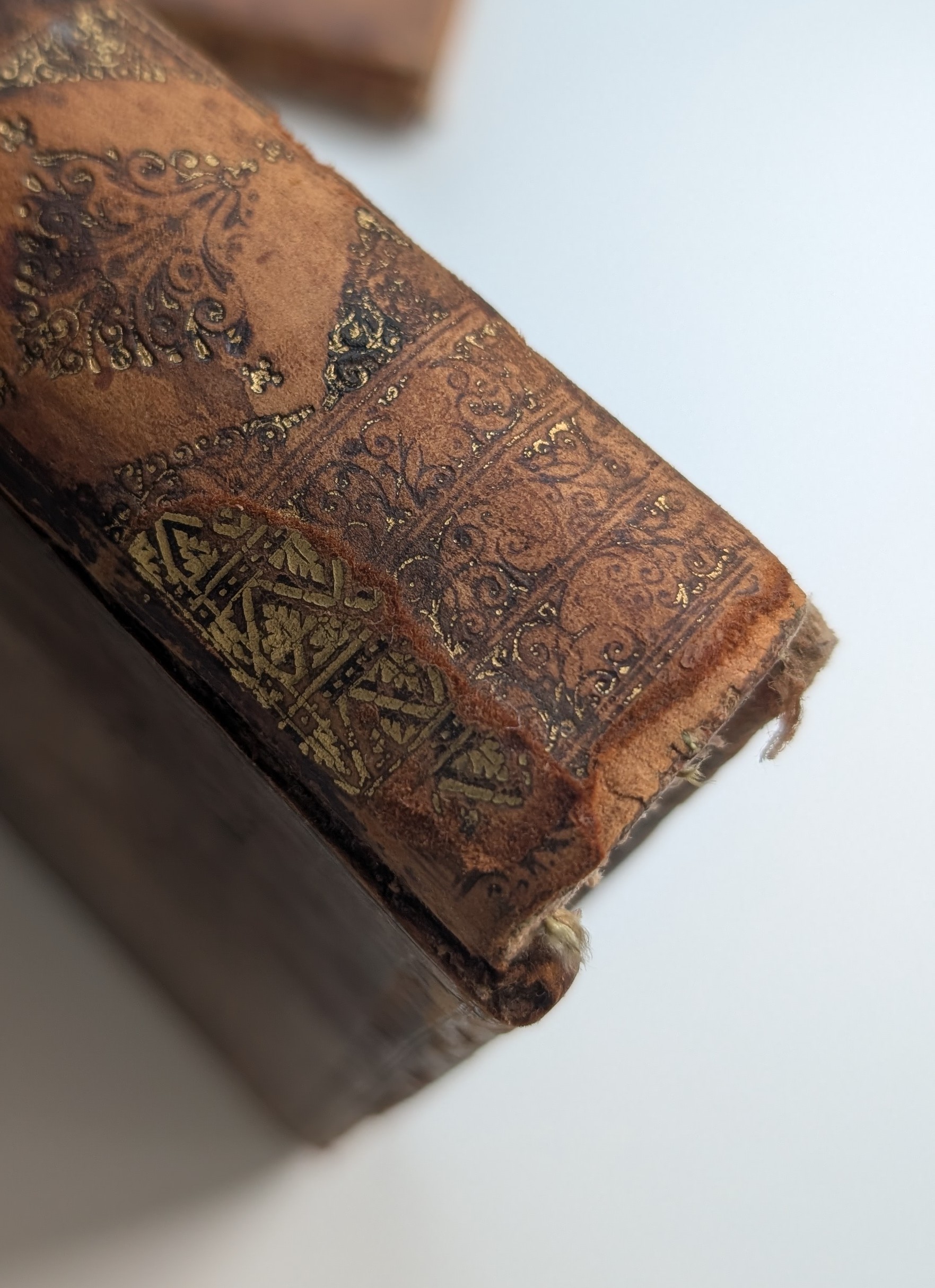
Close up of the most obvious area with two layers
The subject of the book, full of wonderful engravings of Roman art and architecture, seems to make it even more likely that a passing tourist would have commissioned a set to be bound to take home with them.
The result of whatever happened is a particularly unusual binding, with two mysterious contemporary spine coverings.